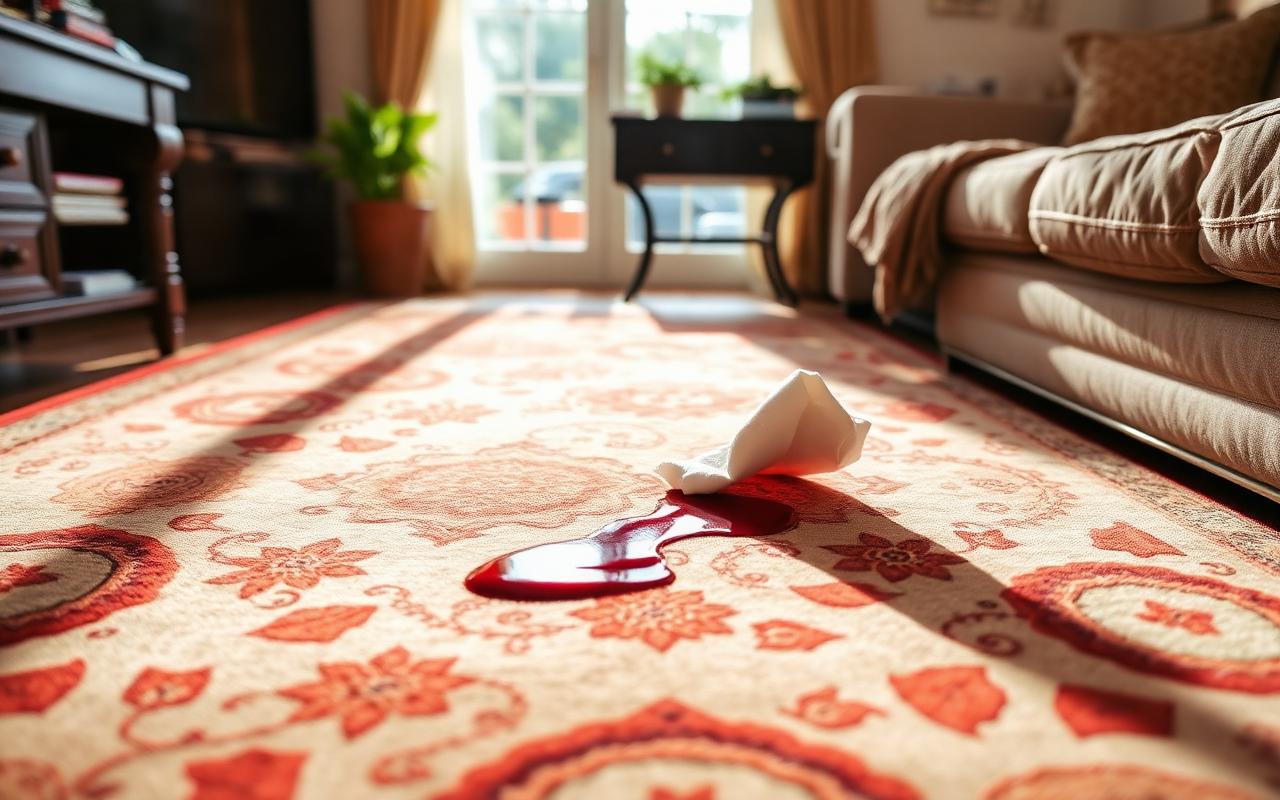
Few things ruin the appearance of a beautiful rug faster than a stubborn stain. Whether it's spilled coffee, muddy footprints, pet accidents, or wine stains from a family gathering, rug stains can quickly become frustrating — especially when you're worried about damaging delicate fibers.
The good news: many stains can be treated successfully when handled correctly and quickly. The key is understanding your rug material, using safe cleaning methods, and knowing when professional help is necessary. In this guide, you'll learn the safest and most effective rug stain removal methods for common household stains, plus expert tips to help protect your rugs from permanent damage.
Why Rug Stains Are Difficult to Remove
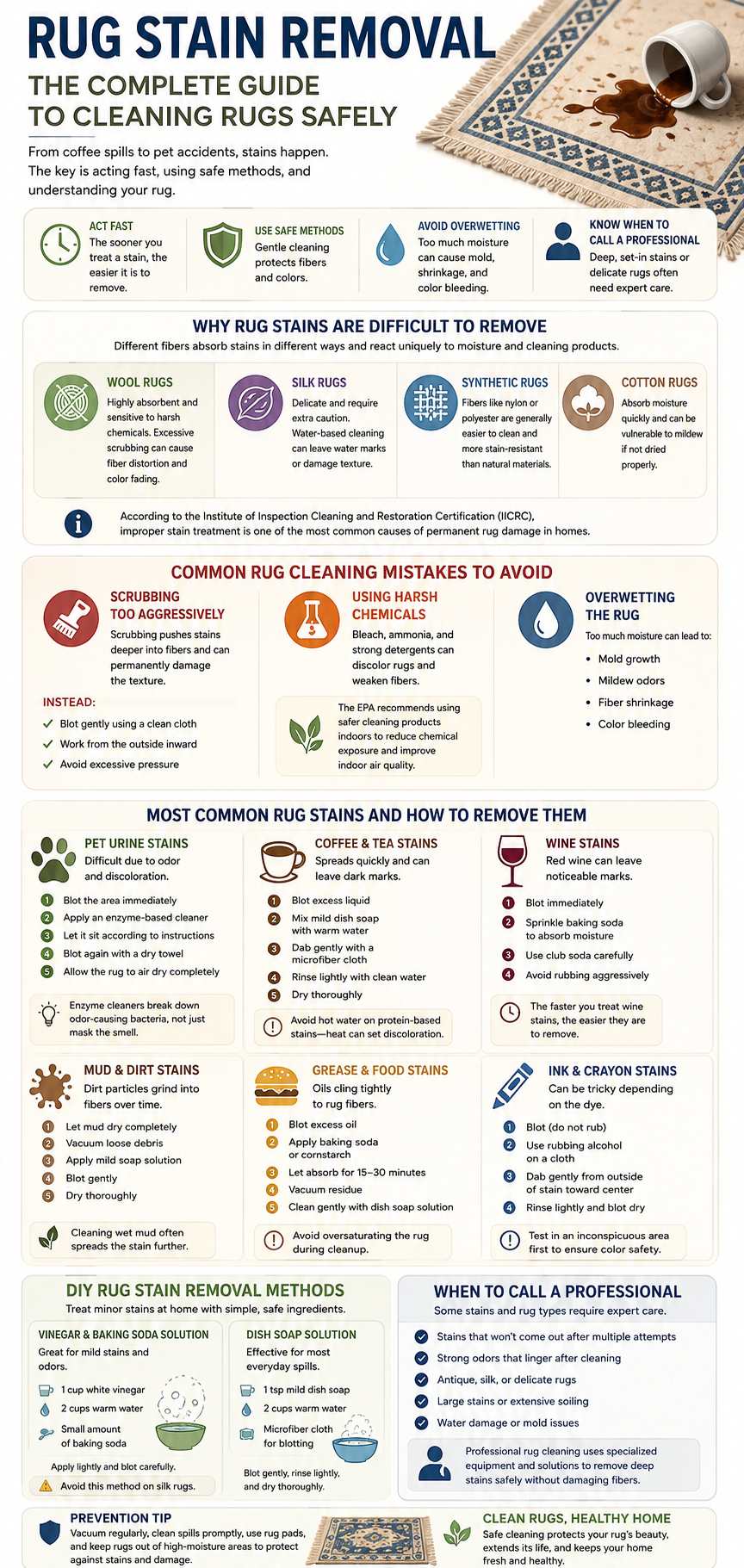
Rugs come in a wide variety of materials, and each fiber reacts differently to moisture, cleaning products, and stains. Some rugs absorb spills immediately, while others trap dirt deep within the fibers where surface cleaning can't reach.
Wool Rugs
Wool is highly absorbent and sensitive to harsh chemicals. Excessive scrubbing can cause fiber distortion and color fading.
Silk Rugs
Silk rugs are delicate and require extra caution. Water-based cleaning can leave water marks or damage the texture if not done correctly. For valuable silk and antique pieces, our hand-wash rug cleaning service uses controlled moisture methods designed specifically for delicate fibers.
Synthetic Rugs
Synthetic fibers like nylon or polyester are generally easier to clean and more stain-resistant than natural materials.
Cotton Rugs
Cotton absorbs moisture quickly and is vulnerable to mildew if not dried properly.
According to the Institute of Inspection Cleaning and Restoration Certification (IICRC), improper stain treatment is one of the most common causes of permanent rug damage in homes. For high-value pieces, our area rug cleaning service uses fiber-specific, pH-neutral methods designed for wool, silk, and antique rugs.
Common Rug Cleaning Mistakes to Avoid
Scrubbing Too Aggressively
Scrubbing pushes stains deeper into rug fibers and can permanently damage the texture. Instead, blot gently with a clean cloth, work from the outside of the stain inward, and avoid excessive pressure.
Using Harsh Chemicals
Bleach, ammonia, and strong detergents can discolor rugs and weaken fibers. The Environmental Protection Agency recommends safer cleaning products indoors to reduce chemical exposure and improve indoor air quality.
Overwetting the Rug
Too much moisture can lead to mold growth, mildew odors, fiber shrinkage, and color bleeding — issues that are far harder to fix than the original stain. This is one reason professional low-moisture rug cleaning often delivers safer results than DIY soaking.
Most Common Rug Stains and How to Remove Them
Pet Urine Stains
Pet stains are among the most difficult rug problems because they involve both discoloration and odor. Blot the area immediately, apply an enzyme-based cleaner, let it sit per instructions, blot again with a dry towel, then allow the rug to air dry completely. Enzyme cleaners break down odor-causing bacteria rather than masking the smell. If odors persist, our pet stain & odor removal service treats urine through the rug, pad, and floor underneath.
Coffee and Tea Stains
Blot excess liquid, mix mild dish soap with warm water, dab gently with a microfiber cloth, rinse lightly with clean water, then dry thoroughly. Avoid hot water on protein-based stains — heat can set discoloration permanently. Coffee spills on wall-to-wall carpeting respond well to hot-water carpet extraction for deeper fiber recovery.
Wine Stains
Blot immediately, sprinkle baking soda to absorb moisture, use club soda carefully, and avoid rubbing aggressively. The faster you treat wine, the easier it lifts. If the stain has already set into upholstery as well, see our upholstery cleaning service for fabric-safe restoration.
Mud and Dirt Stains
Mud can seem harmless, but dirt particles grind into rug fibers over time. Let mud dry completely, vacuum the loose debris, apply a mild soap solution, blot gently, and dry thoroughly. Cleaning wet mud usually spreads the stain further. For rugs layered over broadloom that also need attention, our residential carpet cleaning removes tracked-in soil from both fibers.
Grease and Food Stains
Greasy stains require special care because oils cling tightly to fibers. Blot excess oil, apply baking soda or cornstarch, let it absorb for 15–30 minutes, vacuum the residue, then clean gently with a dish soap solution. Avoid oversaturating the rug. If grease has also reached surrounding furniture, our upholstery cleaning tackles oil-based soils on fabric safely.
DIY Rug Stain Removal Methods
Vinegar and Baking Soda Solution
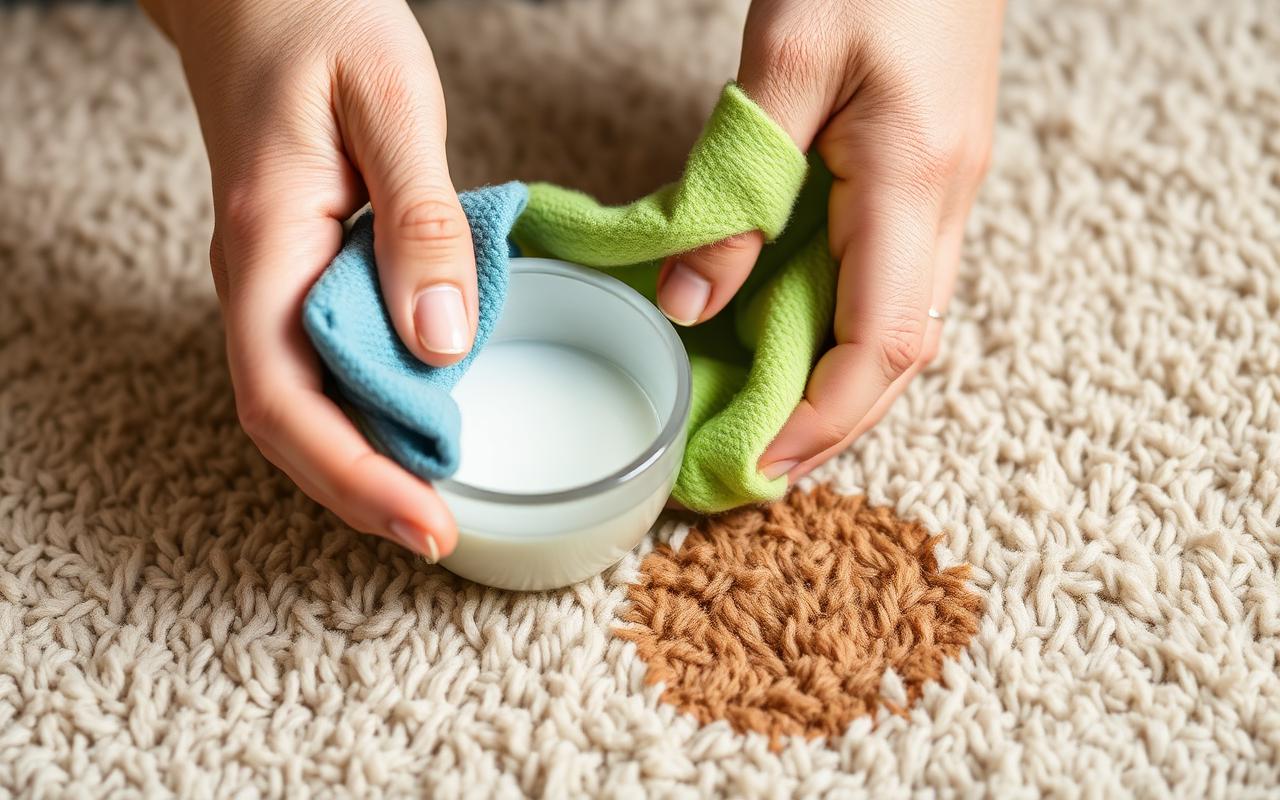
Mix 1 cup of white vinegar, 2 cups of warm water, and a small amount of baking soda. Apply lightly and blot carefully. Avoid this method on delicate silk or antique rugs without testing first.
Mild Dish Soap Method
A small amount of gentle dish soap mixed with warm water is one of the safest DIY options for synthetic rugs. Use only a small amount to prevent residue buildup.
Club Soda for Fresh Stains
Club soda can help lift fresh stains before they settle into fibers, and works best immediately after a spill. When DIY results disappoint, our professional rug cleaning offers fiber-safe spot treatments that go beyond home remedies.
Rug Cleaning Products That Actually Work
Not all stain removers are safe for rugs. Enzyme-based cleaners are ideal for pet urine, organic stains, and odor removal. Non-toxic solutions are safer for homes with pets, children, or allergy-sensitive members. Professional spot cleaners are designed for deep-set stains and fiber-safe treatment. Always test any product on a hidden section of the rug first. For recurring pet odors, our pet stain and odor removal service uses commercial-grade enzyme treatments that neutralize smells at the source.
When DIY Rug Stain Removal Fails
Some stains require professional treatment to prevent permanent damage. Call a pro when you notice persistent odors, deep discoloration, large stain areas, mold or mildew smells, antique or handmade rug concerns, or stains that keep reappearing after cleaning.
Professional rug cleaners use specialized extraction equipment designed to remove contaminants without damaging delicate fibers. Methods typically include hot water extraction, controlled moisture cleaning, hand washing, low-moisture cleaning, and specialized odor neutralization — chosen based on whether the rug is wool, silk, cotton, synthetic, handmade, or antique. See our related guide on how dirty carpets and rugs affect your health for more on indoor air quality.
How to Prevent Future Rug Stains
- Use rug protection treatments that repel liquids, dirt, and pet accidents.
- Adopt a no-shoes policy to keep oils, mud, bacteria, and abrasive dirt particles out of fibers.
- Vacuum regularly to remove dirt before it settles deep into the rug.
- Schedule professional cleaning every 12–18 months — more often with pets, kids, or allergies. Pair it with professional carpet cleaning or upholstery cleaning to refresh the whole room.
Is Professional Rug Stain Removal Worth It?
For delicate, expensive, or heavily stained rugs, professional cleaning is often the safest option. It helps preserve rug value, remove deep odors, restore appearance, protect delicate fibers, and extend lifespan — especially for Persian, Oriental, wool, silk, and antique rugs. If you are unsure whether your rug qualifies, check our transparent pricing or request a free evaluation with no obligation.
Frequently Asked Questions
Old stains often require enzyme cleaners or professional extraction because they have already bonded with rug fibers over time.
Yes — vinegar may damage delicate natural fibers like silk or some wool rugs if used improperly. Always test on a hidden area first.
The best cleaner depends on the stain type and rug material. Enzyme cleaners work well for organic stains, while mild soap solutions are safer for general cleaning.
Yes. Pet urine can cause discoloration, odor buildup, and fiber damage if not treated quickly.
Most rugs should be professionally cleaned every 12–18 months, though high-traffic homes may require more frequent care.
Final Thoughts
Rug stain removal doesn't have to feel overwhelming. Acting quickly, using safe cleaning methods, and understanding your rug's material can prevent many stains from becoming permanent. While DIY methods work for small surface stains, professional rug cleaning is the best path for deep odors, delicate fibers, antique rugs, and long-term protection. Ready to restore your rug? Contact Dan Carpet Cleaning for a free quote or evaluation anywhere in Los Angeles and the South Bay. With proper care, your rugs can stay cleaner, fresher, and more beautiful for years to come.